
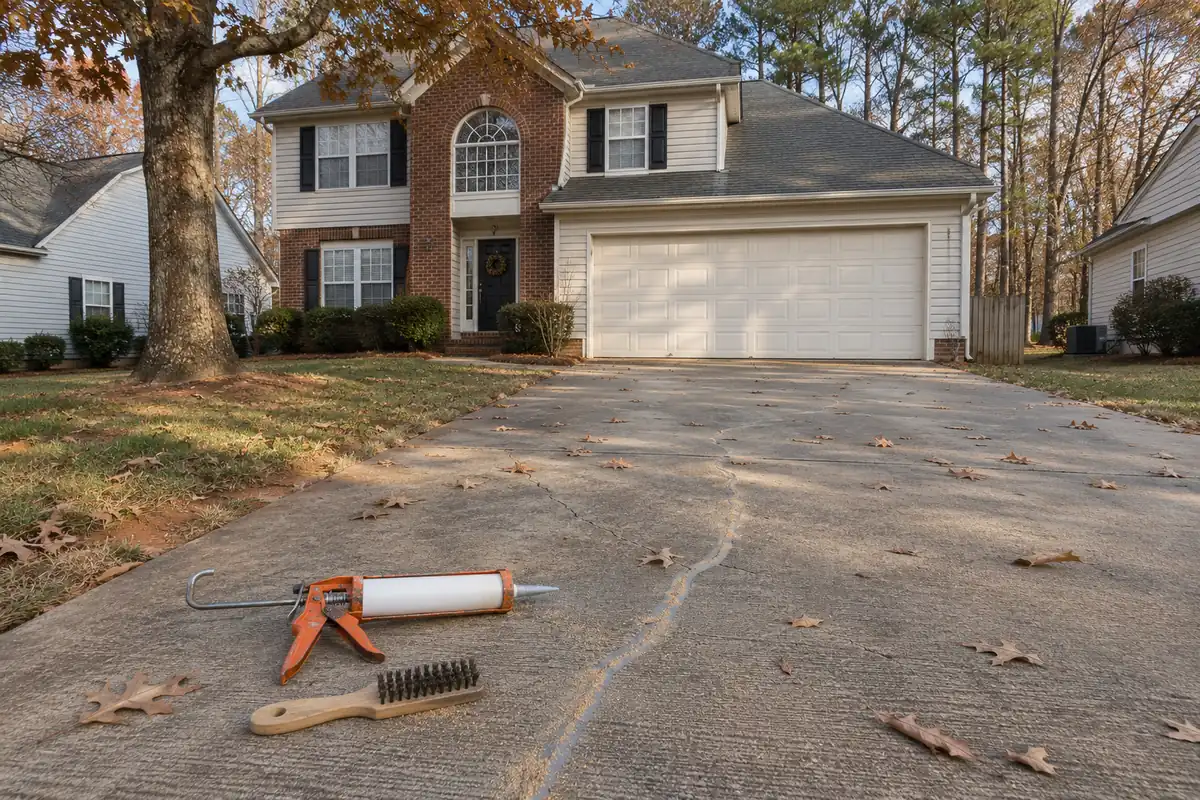
The envelope from the HOA was sitting in the mailbox when you got home. The letter says the driveway needs repair and gives you a date, usually thirty days out, and when you walk outside to look, the only thing you can find is a few cracks. Now you're standing in the driveway wondering whether a tube of something from Lowe's will make the letter go away, or whether the HOA is about to make you replace the whole driveway.
For most driveways that get this letter, the cracks are something you can handle yourself in an afternoon, and a careful job will satisfy most HOAs. There are a few exceptions, though, and you'll want to know which situation you're in before you buy anything.
Start With What the Letter Actually Asks For
Read the letter twice, then find the part of your covenants it points to. HOA notices tend to cite a general "keep your home in good repair" rule, and the same document usually says what counts as fixing it. Some only want the cracks sealed so the driveway looks maintained. Others spell out more, like replacing a panel once it has a certain number of cracks, or getting approval from the architectural committee before any visible change.
If the wording is vague, email the management company and ask a plain question: will cleaned and sealed cracks bring the driveway into compliance, or does the board expect replacement? Get the answer in writing. If thirty days isn't enough because of weather or money, ask for an extension in writing too. It costs nothing to ask, and it helps to show you've already started.
One Charlotte detail matters here. If the crack is in the public sidewalk that crosses your driveway, and you're inside city limits, that piece isn't yours to fix. The Charlotte Department of Transportation repairs damaged public sidewalks, including the stretch of driveway pad the sidewalk runs across, and you report it through 311. Tell your HOA you've reported it and keep the confirmation. Plenty of subdivisions here were built without sidewalks at all, so this only applies to some of you.
Which Cracks You Can Handle Yourself
A crack is a good DIY job when the slab around it is still sound. That means both sides of the crack sit at the same height, the crack is narrower than about half an inch, and the concrete along its edges isn't crumbling or flaking. The thin cracks that wander across a twenty-year-old driveway, or follow a control joint, almost always fall in this group.
That half inch line is the same one we use on our own repair estimates. Under it, on concrete that hasn't moved, it's a repair. A lot of Charlotte's subdivisions went up in the 1990s and 2000s, so their driveways are decades into the wet and dry seasons on our red clay, and fine cracks at that age are normal wear.
Could We Patch It Ourselves?
Could we patch it ourselves, or does it really need more work outside the scope of a reasonable DIY fix?
If the cracks are under about half an inch wide, both sides sit level, and the concrete around them is solid, you can patch them yourself with a flexible concrete crack sealant. If one side has dropped or lifted, the crack is wider than that, or the edges are breaking up, the slab is moving or failing underneath, and a surface patch won't hold.
How to Fill the Cracks So It Actually Lasts
The product matters less than the prep, because any filler only holds when it bonds to clean, dry concrete. These are the steps we'd follow on our own driveway.
- Clean the crack out completely. Use a wire brush, a screwdriver or a narrow chisel to pull out dirt, old filler and loose bits, then blow it out with a leaf blower or a shop vac. Any grit or moisture left in there and the sealant won't bond.
- Let it dry. After a rainy stretch, give it a full dry day or two. Charlotte gets rain in every month of the year, so watch the forecast and pick your window.
- For anything wider than about a quarter inch, push foam backer rod into the crack first so the sealant sits on top of it, about a quarter to half inch deep. That keeps you from pouring a whole tube into the ground and lets the sealant stretch the way it's supposed to.
- Use a flexible polyurethane or self-leveling concrete crack sealant, the kind the label says stays flexible. Run it in slowly and let it level just below the surface.
- While it's still wet, sprinkle a little dry sand over it. The sand sticks, takes away the shine and makes the line look like concrete instead of a gray ribbon of caulk, which goes a long way toward keeping an HOA happy.
A flexible sealant is the right choice because our cracks move. The clay under the slab gets wetter and drier through the year, and the concrete grows and shrinks with the temperature, so a crack opens and closes a little with the seasons. A rigid patch or a sanded mortar in that crack cracks again, usually in the first winter. It's the same reason we route and fill moving cracks with a flexible polyurethane on our own repair jobs.
Watch the temperature on the label too. Most of these sealants want a minimum temperature during application and overnight, and late November in Charlotte still gives you plenty of mild afternoons to work in.
Is There Something From Home Depot or Lowe's That Will Work?
Is there a product I could get at Home Depot, Lowes, that I could use to temporarily patch these until we can get enough money saved to have this replaced?
Yes. A self-leveling polyurethane concrete crack sealant, a bag of backer rod and some sand from either store will seal ordinary cracks for a few years if you clean and dry them first. On a slab that's sinking, heaving or breaking apart, treat it as a cosmetic stopgap, since the cracks will keep reopening until the slab itself gets fixed.
Skip the asphalt crack fillers meant for blacktop and the rigid vinyl patching compounds for these cracks. Patching compound has its place on a chipped step or a shallow broken edge, but in a crack that moves, it lets go.
Why It's Worth Doing Before Winter Either Way
Even if the HOA hadn't written, now is a good time to seal those cracks. Charlotte averaged about 59 nights at or below freezing per winter from 1991 to 2020, and nearly every one of those freezes thaws by afternoon. Water that gets into an open crack freezes overnight, expands, thaws and soaks in a little deeper, over and over, dozens of times a winter. That cycle is what turns a hairline crack into a spalled, flaking edge by spring. A sealed crack keeps the water out of that loop.
When a Do-It-Yourself Fix Won't Satisfy Anyone
If the cracks are wide, one side has sunk, the edges are crumbling, or the panels are cracked clean through in several places, a tube of sealant won't hold, and an HOA that's paying attention won't accept it for long. The question then becomes whether it's a professional repair, a resurface or a replacement, and we walk through how to weigh that in repair versus replacement. A few of the warning signs worth a closer look are the same ones that show up in these letters. If you're seeing new cracks every year, the clay underneath is usually part of the story.
For a professional repair, we take small jobs. We'll tell you our minimum on the first call, and if your cracks are a weekend DIY job, we'll say so and tell you what to buy. When it's more than that, moving cracks get routed and filled with flexible polyurethane, structural cracks get epoxy, and flaking spots get cut back to sound concrete and rebuilt with a polymer mortar textured to match the rest of the driveway. If the whole surface is tired but the slab is solid, resurfacing can give it a fresh, even surface. The estimate is written and puts the options side by side.
If you'd like a second opinion before you answer the HOA, send us a photo of the cracks with a coin next to one for scale, or have us come take a look. You can read more about concrete repairs around Charlotte, or give us a call at (704) 387-3064.